
How to Choose Rain-Friendly Tyres for Your Car
Best Shop in Noida to Buy GFX Mats – Sunny Auto Care, Sector 64
August 11, 2026The monsoon season brings cooler weather and refreshing rain, but it also creates slippery roads, waterlogged streets, and reduced visibility. During this time, your tyres become one of the most important safety components of your vehicle.
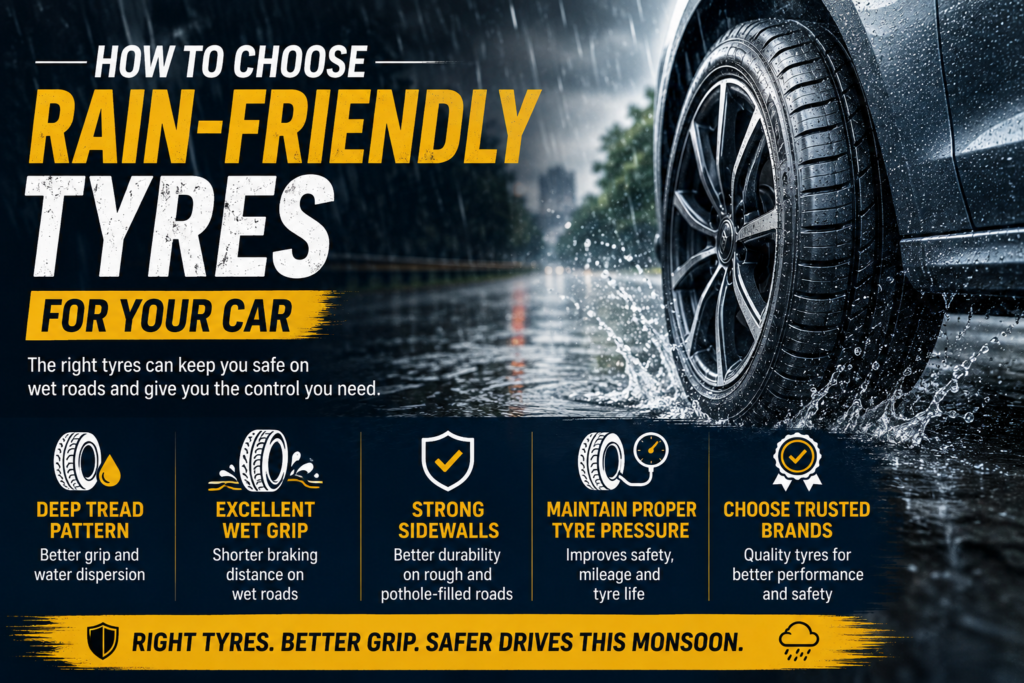
Choosing the right tyres for the rainy season can improve grip, reduce the risk of skidding, and provide better control on wet roads. In this guide, we’ll explain how to choose rain-friendly tyres for your car and what factors you should consider before buying a new set.
Why Rain-Friendly Tyres Matter
Driving on wet roads is completely different from driving on dry surfaces. Water reduces the friction between your tyres and the road, increasing braking distance and the chances of hydroplaning.
Rain-friendly tyres are designed with tread patterns and rubber compounds that help channel water away, ensuring better road contact and improved driving stability.
1. Look for Deep Tread Patterns
Tread depth is one of the most important features of a monsoon tyre.
Deep grooves help disperse water quickly, preventing it from building up between the tyre and the road.
Benefits of deeper tread:
- Better grip on wet roads
- Reduced risk of hydroplaning
- Improved braking performance
- Enhanced cornering stability
If your existing tyres have worn-out tread, replacing them before the monsoon is highly recommended.
2. Choose Tyres with Excellent Wet Grip Ratings
Many premium tyre manufacturers test their tyres for wet-weather performance.
When selecting new tyres, choose models known for:
- Strong wet-road traction
- Better braking in rainy conditions
- Improved handling on slippery surfaces
Brands like Michelin, Bridgestone, Yokohama, Apollo, CEAT, and Goodyear offer tyres designed to perform well in Indian monsoon conditions.
3. Select the Right Tyre Size
Always install tyres in the size recommended by your vehicle manufacturer.
Using oversized or undersized tyres can affect:
- Handling
- Fuel efficiency
- Braking
- Suspension performance
You can find the recommended tyre size in your owner’s manual or on the driver’s side door sticker.
4. Check the Tyre Manufacturing Date
Even unused tyres age over time.
Before purchasing, check the tyre’s manufacturing date (DOT code). Ideally, buy tyres that are recently manufactured to ensure maximum performance and durability.
5. Consider the Rubber Compound
Premium tyres often use advanced rubber compounds that remain flexible even on wet roads.
These compounds provide:
- Better grip
- Lower stopping distance
- Improved comfort
- Longer tyre life
Although they may cost slightly more, they offer better safety and long-term value.
6. Inspect Sidewall Strength
Indian roads often have potholes, especially during the rainy season.
Choose tyres with strong sidewalls that can better withstand:
- Water-filled potholes
- Rough roads
- Unexpected impacts
This helps reduce the chances of sidewall damage and punctures.
7. Don’t Ignore Tyre Pressure
Even the best tyres won’t perform well if they’re underinflated or overinflated.
During the monsoon:
- Check tyre pressure every two weeks.
- Maintain the pressure recommended by the vehicle manufacturer.
- Inspect tyres before long drives.
Proper tyre pressure improves grip, braking, and fuel efficiency.
8. Buy from a Trusted Tyre Dealer
A reliable tyre dealer not only helps you choose the right tyres but also ensures:
- Genuine products
- Professional installation
- Wheel balancing
- Wheel alignment
- Expert after-sales support
Choosing the correct tyre is just as important as installing it properly.
Signs You Need New Tyres Before Monsoon
Replace your tyres if you notice:
- Low tread depth
- Uneven tyre wear
- Cracks on the sidewalls
- Frequent punctures
- Poor grip on wet roads
- Tyres older than 5–6 years (depending on condition and manufacturer recommendations)
Ignoring these warning signs can compromise your safety during heavy rainfall.
Monsoon Tyre Care Tips
To keep your tyres performing at their best:
- Rotate tyres regularly.
- Maintain correct tyre pressure.
- Get wheel alignment checked periodically.
- Avoid sudden braking on wet roads.
- Drive at moderate speeds during heavy rain.
- Inspect tyres before every long trip.
Why Choose Sunny Auto Care?
At Sunny Auto Care, we help drivers stay safe during every season with premium tyre solutions and professional services.
Our services include:
- Premium tyre sales
- Tyre inspection
- Wheel alignment
- Wheel balancing
- Tyre replacement
- Expert tyre recommendations
We offer trusted brands including Yokohama, Michelin, Bridgestone, Apollo, CEAT, and Goodyear, helping you find the perfect tyre for your vehicle and driving needs.
Final Thoughts
Choosing the right tyres for the monsoon isn’t just about buying a new set—it’s about ensuring your family’s safety on every journey. Tyres with deeper tread, excellent wet grip, strong sidewalls, and the correct size provide better control, shorter braking distances, and greater confidence on rain-soaked roads.
Before the rainy season is in full swing, have your tyres inspected by professionals and replace them if necessary. Investing in rain-friendly tyres today can help you drive safely throughout the monsoon.
